About Us
We are pioneers in the future of sustainable living through our ability to design and build innovative ready-made homes.
Our journey from modular toys to flexible housing started from an idea to an integrated system
Our journey began in 2016, with a clear vision to revolutionize Modular Design, aiming to create practical and impactful solutions that serve people and communities in an innovative and sustainable way. The idea was born from a deep belief that design can be a tool for change, and that real solutions start from understanding humans and their needs and transforming them into an innovative product that helps people meet their needs.
In 2018, the vision turned into tangible reality when we began developing educational toys based on Modular Design, aimed at developing creativity, problem-solving, and hands-on learning in children. These were not just toys, but smart educational tools that connect play with the educational experience and reflect the philosophy of flexible, scalable design.
These toys are based on modular design and aim to develop thinking, stimulate creativity, and connect learning with practical experience. By 2019, our expertise in designing precise and easy-to-assemble modular systems earned us our first pre-orders, which were the first fruits of this work, confirming that our approach is not just an idea, but a scalable and applicable model. We began receiving actual orders for our educational products, as a result of the trust built in design quality, execution precision, and ease of installation and customization.
With the progression of years and the acceleration of global changes, especially 2024-2025, we moved from the scope of educational toys to broader horizons. Our vision expanded to include sustainable flexible housing, based on recycling, to provide solutions adaptable to modern communities and emergency situations. Starting from a simple belief: (Everyone deserves beautiful and sustainable homes without long construction times and exorbitant costs of traditional construction). We began a new phase of innovation in flexible and sustainable housing, based on recycling, waste reduction, and rapid response to human needs. Founder Basel Al-Herbawi saw an opportunity to revolutionize home construction by combining advanced manufacturing techniques with principles of sustainable flexible designs that preserve resources, setting a new standard for sustainable living, where our designs rely on renewable energy, eco-friendly materials, and recycling, ensuring every product contributes to a healthier planet.
In 2025, we established strategic partnerships with global companies, launching strategic partnerships with industrial companies in China. These partnerships aim to import and manufacture mobile and modular homes compatible with the modular design philosophy we believe in, some of which are from our innovations, to be adaptable, easy to transport, and suitable for different environments for human, community, and developmental use. Specifically designed to be portable and more flexible and sustainable, while maintaining the modular design philosophy that has proven successful in our educational products.
Thus, our journey transformed from a simple educational toy to an innovative global system, redefining how we learn, live, and build sustainably. Our journey was not just a transition from one product to another, but an intellectual and technical journey that began with an educational toy and evolved into an integrated system redefining the concept of construction, education, and sustainability. This is not the end of the story... but the beginning of a new phase, where we reshape the future and continue innovation step by step.
🧩 From Idea to Revolution: The Story of Globally Transforming Construction
In a world witnessing radical transformations in every field, the construction sector has not remained outside the scope of revolution. The need for faster, more efficient, and flexible construction methods began with the rapid rise in housing demand, environmental pressures, and emergencies requiring immediate solutions. From here, the journey of Modular Design began - not just as an alternative to traditional construction, but as a starting point toward an entirely new construction system.
🏗 The Beginnings: Modular Design is Not Just an Idea
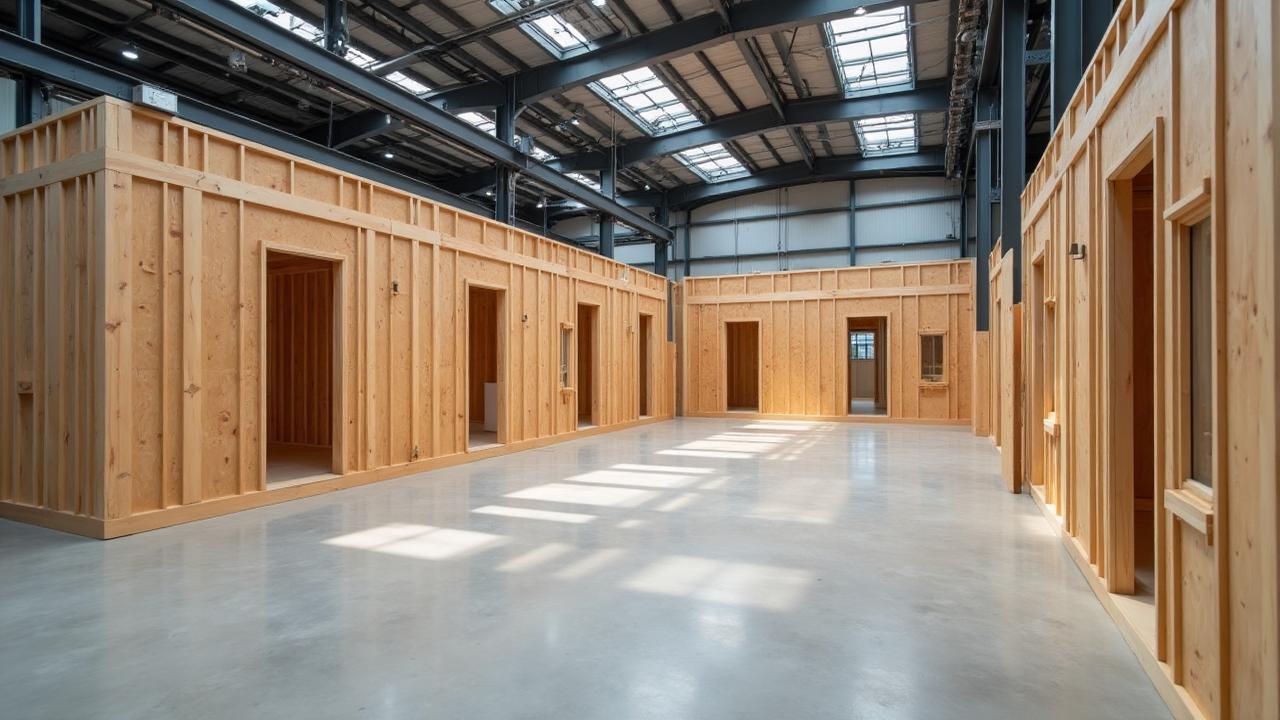
The modern story of modular building design began from the depths of destruction in Gaza, where units are manufactured off-site, then assembled like LEGO pieces to reach a complete building. This method allows for accelerating the construction process, reducing waste, and leading to more accurate and quality products compared to traditional construction. The core value of this idea is that construction becomes measurable, controllable, and repeatable, where each unit represents a piece in a larger system, and can be produced in large quantities in equipped factories and delivered to the site for final assembly.
🏠 The Global Transition: Why Has Modular Design Become a Necessity?
In our world today, there are countless challenges: acute housing crises in many major cities, where supply does not keep up with demand. Natural disasters and wars that destroy infrastructure and create urgent housing crises. Growing interest in sustainability and reducing carbon emissions. Based on this, Modular Design has become not a passing option with no great value or secondary or considered a luxury, but a rapidly accelerating global trend to meet these needs. Using this type of construction allows for reducing execution time, reducing waste, and increasing design flexibility.
🔄 Flexibility in Construction - Resilient Construction
With climate changes and major crises (earthquakes, floods, environmental disasters), what is known as Resilient Buildings emerged - buildings capable of adapting, enduring, and recovering quickly after crises. Here appears the role of companies and modern concepts like ReframeBuilds (derived from the spirit of Reframe Systems) that offer smart and sustainable ready-to-live homes with designs combining comfort, sustainability, and fast delivery. Flexible design doesn't just mean fast construction, but also building units that can be updated, moved, or reconfigured as needed - making them ideal for changing life, crises, and even future projects.
🏭 The Shift to Local Manufacturing and Recycling
With the increasing scale of global destruction and the need for rapid solutions, thinking began about moving construction from traditional sites to advanced production lines - small distributed factories (Microfactories) close to projects, precisely controlling every stage from design to delivery. But here comes a bigger step: innovation in recycling. Instead of relying only on new industrial materials, researchers and designers began: Using recycled materials as new raw materials. Integrating sustainable materials in manufacturing such as recycled wood, recycled plastic, and others. Designing units that can be disassembled and reused in new projects. This idea transforms construction from a resource-wasting process to a sustainable circular system.
🏡 From Ready-Made Homes to the Future
Ultimately, this vision transformed into an integrated construction system:
- Flexible modular design - customizable and repeatable.
- Fast and precise manufacturing in smart factories.
- Flexible solutions that withstand changes and crises.
- Integrating sustainability and recycling into the backbone of construction.
- Homes ready to live in within a week or less instead of months or years.
In the End
In the end, today, construction is not viewed as a collection of traditional manual crafts, but as a smart and innovative industrial system that responds to human needs quickly. The story is no longer just about a house being built, but about moving from crisis to hope, from destruction to reconstruction, and from wasted materials to resources that are recycled and brought back to life, from death to life.
And here lies the essence of the narrative:
(Construction is no longer just about engineering and materials sciences, but has become an integrated ecosystem for resilience, innovation, and a sustainable and hopeful future).
Our Values
Our values lie in the core principles of everything we do, from the design phase to the delivery phase.
Innovation
We continuously invest in new technologies and methods to improve efficiency, quality, and sustainability.
Customer First
Every home is built with care and attention to detail, ensuring complete satisfaction for our customers.
Expert Team
Our team and partners from global and local companies and construction offices, including engineers and craftsmen, have decades of accumulated experience in sustainable construction and innovation capability.
Our Mission
Making high-quality sustainable housing accessible to everyone through innovative manufacturing technology.